
On this page 4 sections
A clinic rarely chooses a dental implant system by reading a spec sheet start to finish. The decisions arrive in a particular order instead, each one narrowing what is still open, and getting the order wrong is how a practice ends up holding two incompatible component drawers a year in. This is that order: five questions, each one answerable by something a dental implant manufacturer should hand you directly rather than something you take on faith. For what the parts themselves are, see the companion piece on dental implants explained.
Start with the connection platform, not the series name
The connection is the interface between the implant and everything that will ever sit on it, and it is the one choice a clinic cannot walk back without replacing stock. Every abutment, healing cap, impression coping and multi-unit component is cut for a specific platform, not for a series name, so two series can share a platform and every component between them, or sit one product apart and share nothing.
| Platform | Hex across flats | Taper | Screw | Series on it |
|---|---|---|---|---|
| NP connection | 2.25 mm | 12° Morse taper | M1.6 | IP Series, AK Series |
| RP connection | 2.50 mm | 11° Morse taper | M2.0 | SP Series (S-Fix Pro), AK* Series |
| IP connection | 2.45 mm | 45° Morse taper | M1.8 | IP+ Series |
| ZE connection | 2.25 mm external hex | M1.6 internal | M1.6 | ZE Series |
| One-piece | No connection | — | — | B Series, C Series |
Diameter is a poor way to tell platforms apart, because they overlap almost completely: NP implants run from 3.5 to 5.5 mm and RP implants run from 3.6 to 6.0 mm. What separates them is which abutment fits, which is why this is the first question rather than the third. Ask any dental implant manufacturer you are comparing which platform a series sits on before asking about the body design, and you will already know which component set follows you into every case.
Match the body design to the bone you actually place in
Once the platform is settled, the body design decides how the implant behaves at insertion, and that decision is really a question about bone density and site condition rather than brand preference.
| Situation | Series | Platform | Why |
|---|---|---|---|
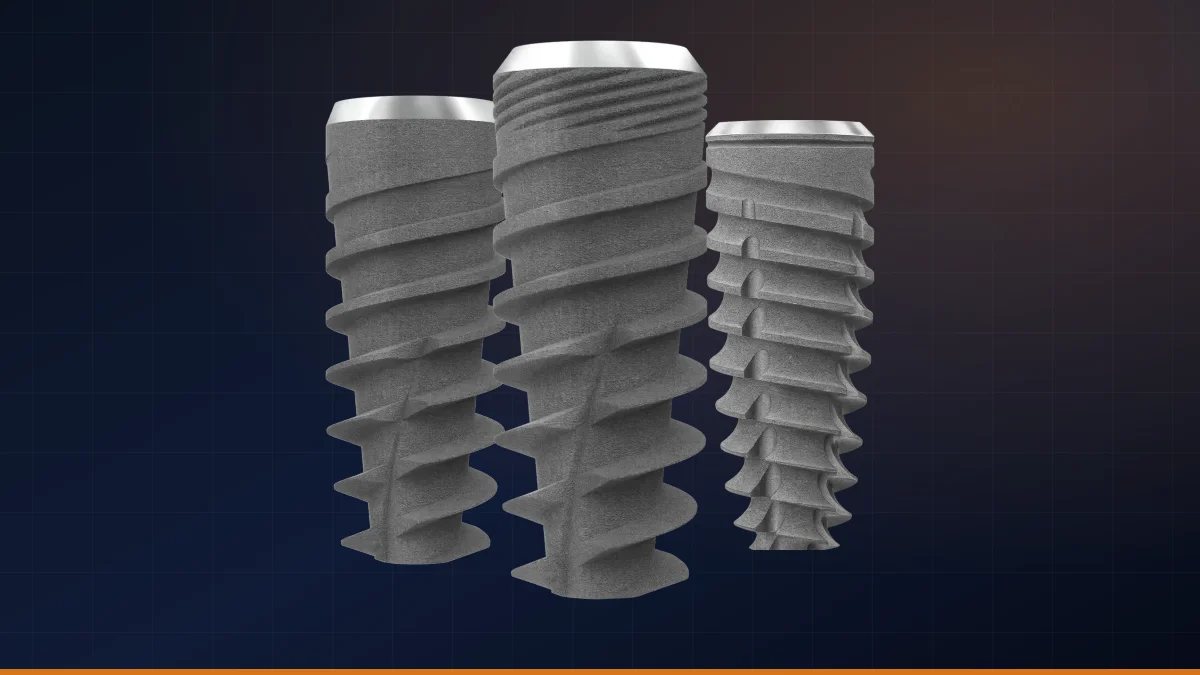
| Routine bone-level restoration, adequate bone | IP Series or SP Series | NP or RP | Expanding taper, two-start thread; the platform decides the component set |
| Low-density or soft bone, immediate placement | AK Series | NP | Progressive high-angle thread compacts bone while cutting, aimed at primary stability where bone is poor |
| Narrow ridge, minimal osteotomy, immediate loading | C Series | One-piece | Compressive thread design condenses soft cancellous bone through a deliberately small osteotomy |
| Thin ridge needing bicortical engagement, or an infected socket | B Series | One-piece | Bicortical, bendable prosthetic segment, polished rather than roughened surface |
| Atrophic maxilla where grafting is being avoided | ZE Series | ZE (external hex) | Zygomatic anchorage, 30 to 62.5 mm, 55° angulated head for an immediate fixed provisional |
| Anatomy no catalogue size fits | PSI Series | Case-specific | Designed from the patient's own CBCT and validated before manufacture, not selected from a matrix |
A dental implant manufacturer that offers only one body design is asking every case to fit one bone-quality assumption. The point of carrying a range is that soft posterior bone and a routine anterior site are not the same engineering problem, and the thread should be chosen for the one in front of you.
Size the range against the caseload you actually have
A published size matrix is only useful measured against the cases a practice sees, not the numbers a catalogue leads with. IP spans 7.5 to 20 mm, SP spans 7 to 14 mm, and AK spans 7 to 13 mm — three different length envelopes on the same general bone-level idea. If posterior cases in your practice regularly call for a short implant, a range that starts at 8 mm is a different proposition from one that starts at 7. Pull the diameters and lengths you have placed over the last year before comparing systems, and check them against the published matrix rather than a sales conversation.
Confirm the component list, the kit and the certificates exist
- 01 Ask for the full component list, not a sample
Straight and angled abutments, multi-unit components, healing caps, impression copings, analogs and scan bodies all carry their own article codes. If a manufacturer cannot hand you that list against a platform, the range is thinner than the marketing suggests.
- 02 Check the surgical kit is diameter-matched, not generic
A kit built around a connection platform and a diameter envelope, with a drilling sequence published against bone density, is what turns a specification into a placed implant. A generic tray with no published protocol is asking the clinician to design one mid-surgery.
- 03 Ask for certificates by number, not by claim
Not "we are CE and ISO certified" but the certificate number, the notified body and the expiry date. i-Fix, for example, is manufactured under EN ISO 13485:2016 and carries the CE mark under notified body 2803 — figures that can be checked against the certificate rather than taken on the word of a sales rep.
- 04 Ask which manufacturing steps happen in-house
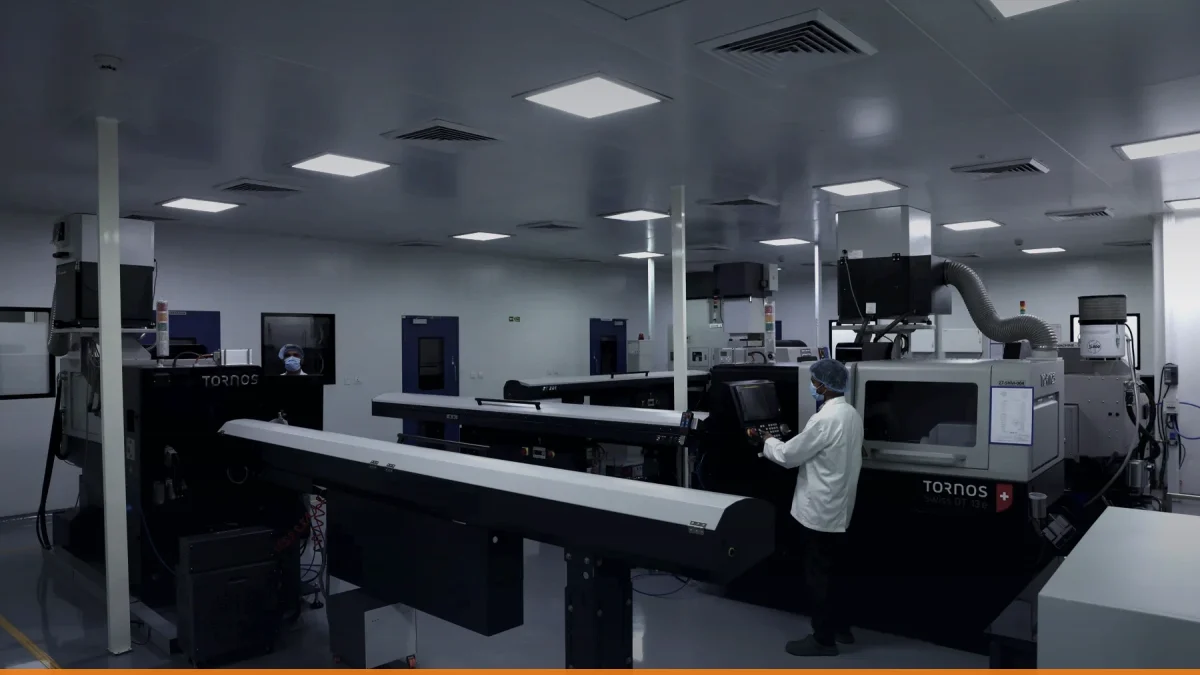
Machining, clean-room surface treatment, dimensional inspection against the drawing, and documentation that ties a finished implant back to its material certificate are four separate steps. A manufacturer that performs all four on one site can answer a specification question with a number; one that subcontracts some of them can usually only relay what it has been told.
This is also where "dental implant manufacturer in India" as a search term turns into a real filter rather than a location. India has several manufacturers at very different points on that four-step list, and the honest way to tell them apart is the same four questions above, asked of each one, not a claim about country of origin on its own.