
On this page 9 sections
- The dental implant company in India behind the brand
- Where the implants are made
- What the range covers
- The surface, and why Sweden is in the specification
- Certification, and what each certificate actually covers
- Documentation: what comes with the product
- How supply works, for clinics and for distributors
- A note on the two names
- Questions clinics and distributors actually ask
i-Fix is the dental implant brand of Kamal Medtech, and every implant carrying the name is machined, cleaned, inspected and packed at one site in India. That single sentence answers most of what a clinic or a distributor is really asking when they look up an implant company, but it leaves the useful detail out. This page fills it in: the company behind the brand, what the range covers series by series, which certificates are held and what they cover, and how an order actually reaches a clinic.
The dental implant company in India behind the brand
Kamal Medtech is a dental implant manufacturer in India, and the engineering business it sits inside is older than the implant line by four decades. Kamal Encon Industries Limited has been in precision manufacturing since 1973. Kamal Medtech was incorporated in 2017 as a medical device manufacturer within that group, and the i-Fix implant portfolio was introduced the following year, in 2018, published from the start with its own drilling protocols rather than as a body catalogue alone. The order of those dates matters more than it looks. The machining discipline came first and the implant line was built on top of it, which is a different starting position from a distribution business that later contracted manufacturing out.
The range then grew one connection platform at a time. The one-piece B and C Series arrived in 2019. The IP Series, on the NP connection, followed in 2021. The zygomatic ZE Series came in 2023, the AK Series in 2025, and the SP Series, on the RP connection, in early 2026. IP+ is announced for September 2026. Each of those is a real product page on this site with its own size matrix and its own instructions for use, which is the practical test of whether a series exists or is a plan.
Where the implants are made
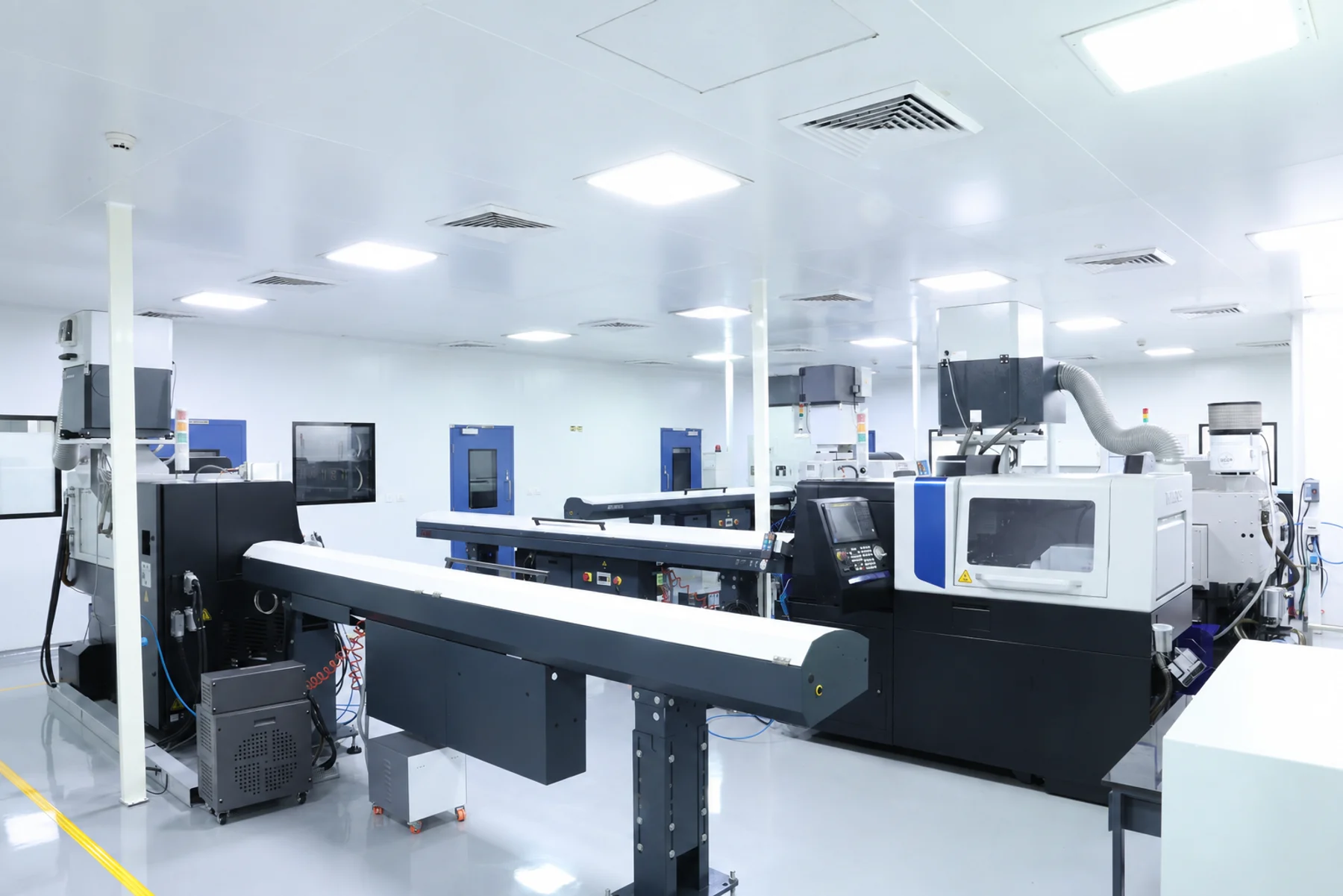
The facility is in India, a 50,000 square foot site in the India. It holds four things that usually sit in four different companies: the machining floor, clean-room processing, dimensional inspection, and a digital dental laboratory. An implant is cut from bar stock on sliding-head machines, cleaned and surface-treated in the clean room, measured against the drawing on an optical measuring machine, then packed and documented on the same site.
Keeping all four under one roof is what makes it possible to answer a specification question with a real number rather than a promise to check with a supplier. It is also why patient-specific work is feasible at all: a PSI case is designed from the patient's own CBCT anatomy and then cut on the same floor as the catalogue range, with the design rationale and quality sign-off compiled per case.
What the range covers
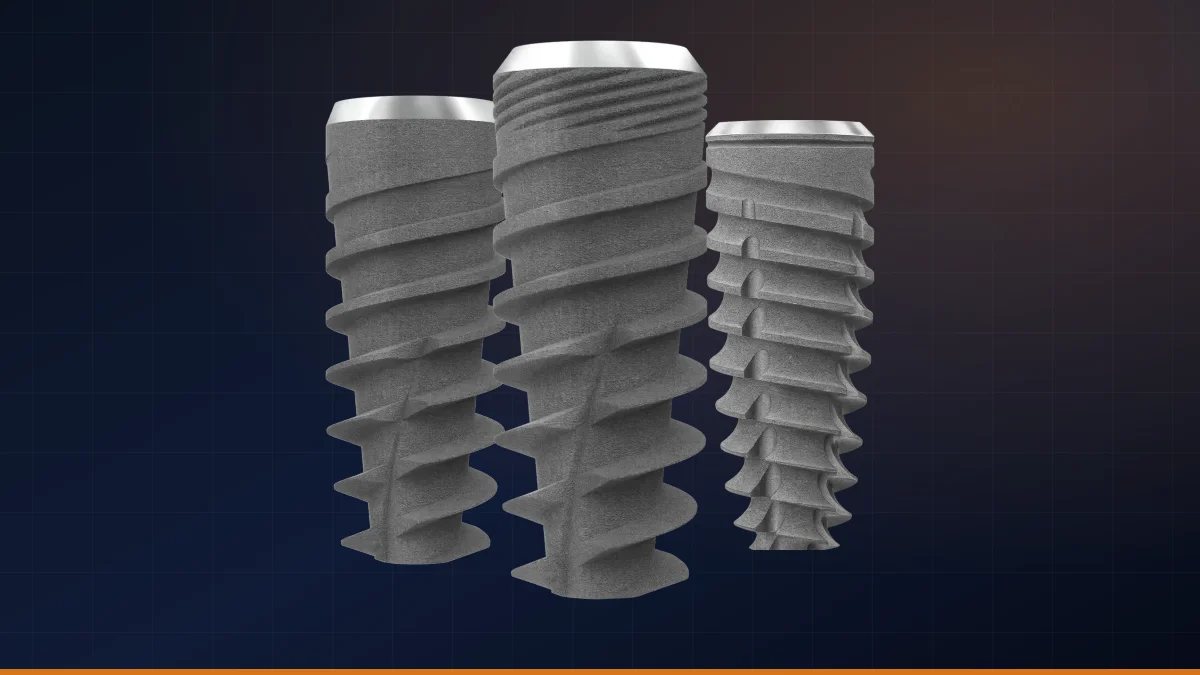
Ten series, and they are not ten variations on one implant. Four are two-piece bone-level systems that differ by connection platform and thread design. Two are one-piece implants for cases where a separate abutment is not wanted. One is zygomatic. One is patient-specific, with no fixed sizes at all. Two are announced and not yet released, and are marked that way everywhere on this site rather than quietly listed as available.
| Series | Also known as | Type | Connection | Sizes |
|---|---|---|---|---|
| IP Series | i-Fix Pro | Bone-level, two-piece | NP — hex 2.25 A/F, 12° Morse, M1.6 | Ø 3.5–5.5 mm · 7.5–20 mm |
| SP Series | S-Fix Pro | Bone-level, two-piece | RP — hex 2.50 A/F, 11° Morse, M2.0 | Ø 3.6–6.0 mm · 7–14 mm |
| AK Series | Apex Konnect | Progressive thread, two-piece | NP — hex 2.25 A/F, 12° Morse, M1.6 | Ø 3.5–5.0 mm · 7–13 mm |
| B Series | i-Fix One | One-piece bicortical | One-piece, bendable prosthetic segment | Ø 3.6 mm · 8–26 mm |
| C Series | i-Fix C-1 | One-piece compressive | One-piece, compressive thread | Ø 3.5–5.5 mm · 8–20 mm |
| ZE Series | i-Fix Zygon | Zygomatic | M1.6 internal, external hex 2.25 A/F | Ø 4.6 mm · 30–62.5 mm |
| PSI Series | — | Patient-specific | Defined per case | No fixed matrix |
| Crown Series | — | Digital restorations | Not an implant line | Per case |
| IP+ Series | — | Bone-level, two-piece | IP — hex 2.45 A/F, 45° Morse taper, M1.8 | Coming soon |
| AK* Series | — | Progressive thread, two-piece | RP — hex 2.50 A/F, 11° Morse, M2.0 | Ø 3.6–5.0 mm · 9–13 mm |
Every two-piece body in the range is machined from ASTM F136 ELI Grade 5 titanium alloy, the extra-low-interstitial grade written for surgical implant use. IP+ is specified across Grade 5 and Grade 23. The zygomatic ZE body carries a published minimum tensile strength of 860 MPa, 10% elongation and oxygen content at or below 0.13%, which are the numbers the ELI designation is actually about.
The surface, and why Sweden is in the specification
The bone-level range is finished with a Nano Bio Activated surface developed with Psilox AB in Uppsala, Sweden. A surface treatment does one job: it changes the topography and the surface chemistry of the titanium so that bone cells attach and lay down bone against it faster and more completely than they would on a smooth machined finish. That process is osseointegration, and the surface is the only part of the implant that ever touches the bone directly, which is why it gets a named development partner rather than a line in a process sheet.
Not every series carries it, and that is deliberate. The B Series is polished rather than roughened, because it is specified for placement in infected extraction sockets where a smooth surface offers bacteria less to hold on to. The C Series carries surface-treated threads. When a supplier tells you every implant it sells has the same premium surface, that is usually a marketing sentence rather than an engineering one.
Certification, and what each certificate actually covers
This is the section a distributor reads first and a clinic reads last, and it is worth being precise about, because "CE certified" and "ISO certified" are used loosely enough that they have stopped meaning much on their own. Here is what is actually held, with the numbers as printed on the documents.
| Document | What it covers | Number and validity |
|---|---|---|
| EN ISO 13485:2016 | Quality management system for medical devices | QMS-13-013-2021/C, issued by Procedo International Certification, valid until 01/09/2027 |
| ISO 13485:2016 (NABCB accredited) | The same standard under NABCB accreditation | MD-QMS/91/R/N/2609/d, issued by Zenith Quality Assessors Pvt. Ltd., re-certified 22/07/2025, valid until 26/07/2028 |
| EU MDR transition confirmation | Notified Body confirmation that the covered devices remain in scope under the MDR 2023/607 transition provisions | Reference IN_014458_2024_01, 30 May 2024, issued by HTCert, Notified Body 2803 |
ISO 13485 is a quality management system standard. It says the manufacturer runs a controlled, documented process with traceability, not that any individual device has been approved by anyone. CE marking under the European Medical Device Regulation is the conformity route, and the Notified Body number for these devices is 2803. If a supplier quotes you a different notified body number for the same products, that is a question worth asking rather than an administrative detail.
Documentation: what comes with the product
Every series has a catalogue and an instructions-for-use document, both carrying printed revision and document numbers so a clinic can tell which version it is holding. The Dental Implants and Prosthetics Compendium is currently at Rev-04, document IX-BRC-M-03-20082026. The IP Series catalogue is at Rev-04, the SP Series at Rev-01, and the Apex Konnect catalogue at Rev-02. Every current instructions-for-use document carries the number IFU-03-050320 at Rev-01.
Those numbers are printed here for a reason that has nothing to do with marketing. When a clinic queries a component that does not seat, the first question is which revision of the catalogue the order was placed from. A supplier that cannot answer that has no version control, and version control is most of what ISO 13485 is about.
How supply works, for clinics and for distributors
Domestic and export orders are packed and documented at the same manufacturing site that made them. Beyond India, there is distribution or partner presence in the UAE, Saudi Arabia, Iraq, Egypt, Germany, Japan, Malaysia, Nepal, Sri Lanka, Russia and Armenia, and the Uppsala surface development relationship sits inside that European footprint.
- 01 A clinic buying for the first time
Start from the connection platform rather than the series name, because the platform decides which prosthetic components you will be ordering for the next ten years. Take the catalogue and the drilling protocol for the series you choose, then the surgical kit that matches its diameter envelope.
- 02 A clinic already placing implants
The question is usually whether the component set covers what your restorative cases need. The prosthetics pages list every abutment, coping, analog and screw with its article code, so the answer is checkable before an order rather than after one.
- 03 A distributor evaluating the line
Ask for the certificates by number, the current catalogue revision, and the size matrix per series. All three are published on this site. Territory and expected annual volume are what the partnership conversation actually starts from.
A note on the two names
You will find the same implants under two naming conventions, and it causes genuine confusion when a clinic cross-references a code. i-Fix is the brand; Kamal Medtech is the manufacturer, and its own product pages use its own names for several series. IP Series is i-Fix Pro, SP Series is S-Fix Pro, AK Series is Apex Konnect, B Series is i-Fix One, C Series is i-Fix C-1 and ZE Series is i-Fix Zygon. The article codes are the same in both places, and the article code is what an order is actually placed against.
Questions clinics and distributors actually ask
Which is the best dental implant brand in India?
No manufacturer can answer that about itself and be believed, so here is the answerable version. Judge an implant brand on four things you can check without asking anyone: whether the size matrix and article codes are published, whether the drilling protocol is published, whether the certificates can be quoted by number with an issuing body and an expiry date, and whether the prosthetic component list exists in writing. All four are on this site for every released series. A brand that cannot produce them is asking for trust it has not documented.
Are these make in India dental implants?
Yes, and at one site rather than assembled from imported components. Machining, clean-room processing, dimensional inspection and packing all happen in India in India. Indian dental implant systems are sometimes marketed on the label rather than the process, so the useful question to put to any domestic supplier is which of those four steps it performs itself.
What is the dental implant system price in India?
There is no public price list, and a manufacturer that publishes one is usually quoting a single line rather than a system. What a clinic pays depends on the series, the component set it needs alongside the implants, whether a surgical kit is part of the first order, and volume. Send the series and the expected monthly usage and the product team will quote against the current catalogue revision.
Do you work as a bulk dental implant supplier, or as a dental implant supplier for dental clinics?
Both, through different routes. Clinics order directly or through the distributor covering their territory. Bulk supply is a distribution conversation, and it starts from territory and expected annual volume rather than from a price per unit.
How do I become a dental implant distributor for i-Fix?
A dental implant distributorship opportunity is assessed on territory, the clinical base you already sell into, and expected annual volume. The partnership page carries the enquiry form and the documents a due-diligence review normally asks for. Note that this is a distribution agreement rather than a dental implant franchise: there is no franchise fee and no branded-clinic model. The two words arrive interchangeably in enquiries and they describe different arrangements, so it is worth being clear about early.
What does a dental implant business partnership in India involve?
Three things, in practice: an agreed territory, an agreed stocking level across the series you will actually sell, and access to the documentation your customers will ask you for. The catalogues, instructions for use and certificates are all published, so a distributor is never dependent on the manufacturer to answer a clinician on a specification.