
On this page 4 sections
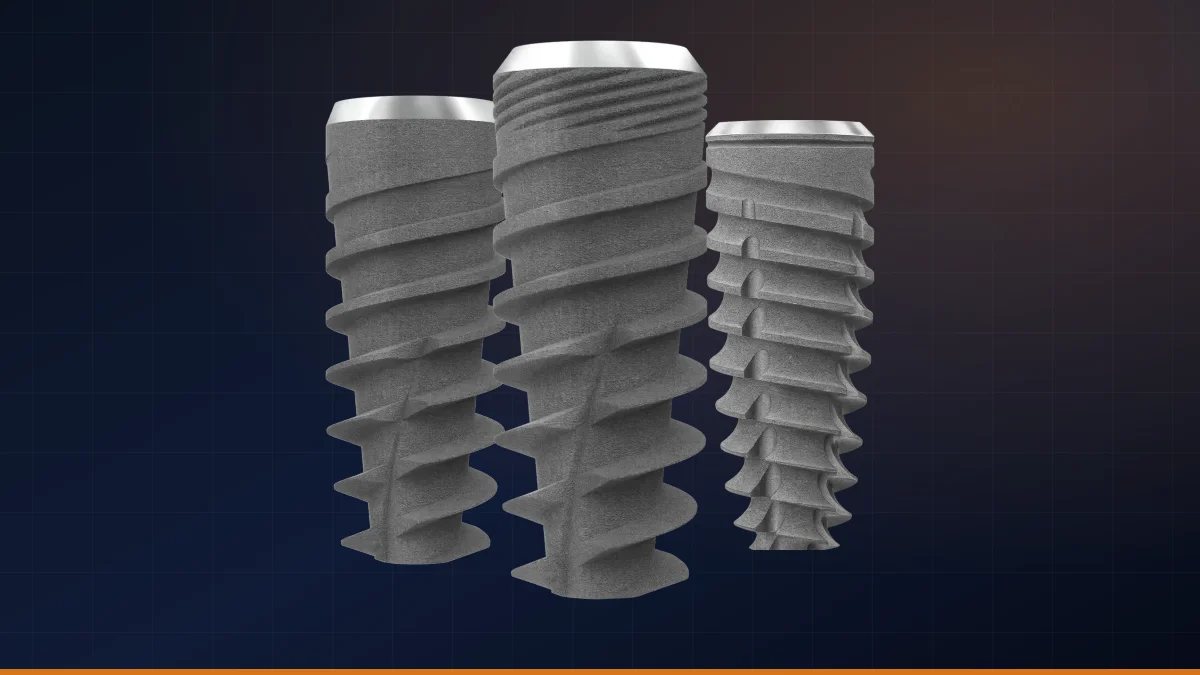
Very few implant cases are only an implant. A socket needs grafting, a ridge needs expanding, a sinus needs lifting, and at the end of it a laboratory has to make something to screw onto the abutment. A clinic that buys those four things from four suppliers spends a surprising amount of its week reconciling them. This page covers what i-Fix supplies either side of the implant itself: synthetic bone graft biomaterials, magnetodynamic surgical instrumentation, and an on-premises digital dental laboratory.
Bone graft material for dental implants: the Bonegraft range
A bone graft substitute has two jobs that work against each other. It has to hold space while the body rebuilds bone into a defect, and it has to leave on roughly the schedule that new bone arrives. Too durable and it occupies volume that should have become bone; too soluble and the space collapses before anything has filled it. Every number on a graft data sheet is describing where the manufacturer settled that trade.
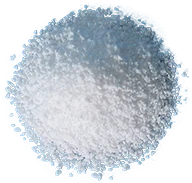
Bonegraft is the graft line of the same dental bone graft manufacturer in India that makes the implants, which is the reason the two arrive on one order and one invoice. It is fully alloplastic, meaning it is synthesised rather than derived from animal or human tissue. That removes the disease-transmission question entirely, and it removes the patient conversation that goes with xenograft material, which for some practices is the deciding factor on its own. It comes in two materials.
| Bonegraft TCP | Bonegraft BCP | |
|---|---|---|
| Composition | Pure beta-tricalcium phosphate (β-TCP) | Biphasic calcium phosphate (HA / β-TCP) |
| Porosity | 80% | Biphasic scaffold |
| Pore size | 400 µm across 90% of pores | — |
| Mechanical resistance | 3.0 MPa | — |
| Forms | Granules 0.1–0.5, 0.5–1, 1–2 mm; blocks; cylinders | Granules 0.1–0.5 through 3–4 mm; crunch 4–7 mm; blocks, cylinders, sticks, wedges |
| Packaging | — | 1 g to 30 g packs |
The three TCP figures are worth reading properly. Porosity at 80% means four fifths of the material is space for bone and blood vessels to grow into rather than material to be resorbed. Pore size at 400 µm across 90% of pores matters because pores below roughly 100 µm do not admit the vasculature that new bone needs, so a material can be highly porous and still be functionally closed. Mechanical resistance at 3.0 MPa is what allows the graft to be condensed and hold its shape without crushing into powder.
The material is radiopaque, so integration can be followed on routine follow-up imaging rather than taken on trust, and it mixes readily with the patient's own blood, which is how it is normally handled at the chairside. No membrane is required unless there is a specific risk of graft exposure.
- 01 Pour
The granules go directly into the defect site.
- 02 Mix
Combine with the patient's own blood so the material handles as a mass rather than loose granules.
- 03 Pack
Pack and shape the graft to fill the void.
- 04 Condense
Condense to stabilise the graft before closure.
- 05 Close
Close over the site. No membrane is required unless exposure risk exists.
Osseotouch: preparing a site without drilling it
i-Fix is a dental implant surgical instruments manufacturer for its own kits, and a distribution partner for one instrument it does not make. The Osseotouch magnetic mallet is a magnetodynamic instrument that prepares an implant site by displacing and condensing bone rather than cutting it away. It is made by Meta Ergonomica Srl in Italy and distributed internationally as Osseotouch by OSNRGY S.R.L.; i-Fix is one of its distribution partners. It is included here because it changes what is possible in exactly the bone situations the implant range is aimed at.
The mechanism is a controlled magnetic impulse lasting 80 microseconds, delivered through a pen-like handpiece at one of four selectable force levels between 75 and 260 daN, advancing 1 mm per strike. Because the energy is delivered as an impulse rather than as friction, no heat is generated, which means no irrigation is needed and the surgical field stays dry and visible.
| Parameter | Value |
|---|---|
| Technology | Magnetodynamics |
| Force levels | 4 selectable, 75 to 260 daN |
| Impact time | 80 microseconds per strike |
| Excursion | 1 mm per strike, millimetric control |
| Heat generation | None, no irrigation required |
| Grip | Pen-like, single-handed operation |
What that buys clinically is bone. Trabecular bone is displaced and compacted rather than removed, so the density at the site improves during preparation instead of degrading, and because the bone is displaced rather than cut, the axis can be corrected mid-procedure. The published applications run from atraumatic extraction through crestal sinus lift, split-crest ridge expansion and full osteotomy preparation for All-on-4 and All-on-6 cases.
There is real literature behind it, which is not something that can be said of every instrument sold on a technique claim.
| Study | Finding |
|---|---|
| Schierano et al., 2021 — Materials (MDPI) | Biomolecular, histological, clinical and radiological study of the technique; reported significantly more newly-formed bone and osteoblasts, and up to six times higher BMP-4, at magnetic-mallet sites. |
| Baldi et al., 2024 — Exploration of Medicine | Compared magnetic-mallet preparation against burs on accuracy, bone loss and temperature; significantly better on all three (P < 0.01). |
| Bennardo et al., 2022 — Journal of Personalized Medicine (MDPI) | Systematic review of 14 studies covering 619 extractions and 880 implants; zero cases of BPPV in the magnetic-mallet group against seven with a manual mallet. |
Eight kit configurations are listed, each built around a procedure rather than a product line: an essential extraction kit for atraumatic extractions that preserve the socket for immediate placement, a Black Ruby kit for drill-free osteotomy, an Elevate kit for crestal sinus lift with millimetric stop control, a crest expansion kit for split-crest work with simultaneous implant placement, a dynamic guided kit for computer-guided protocols, a complete implant surgery kit, a BLEXO extraction and luxation kit, and a streamlined six-instrument Easy-In configuration.
Crown Series: the digital dental laboratory
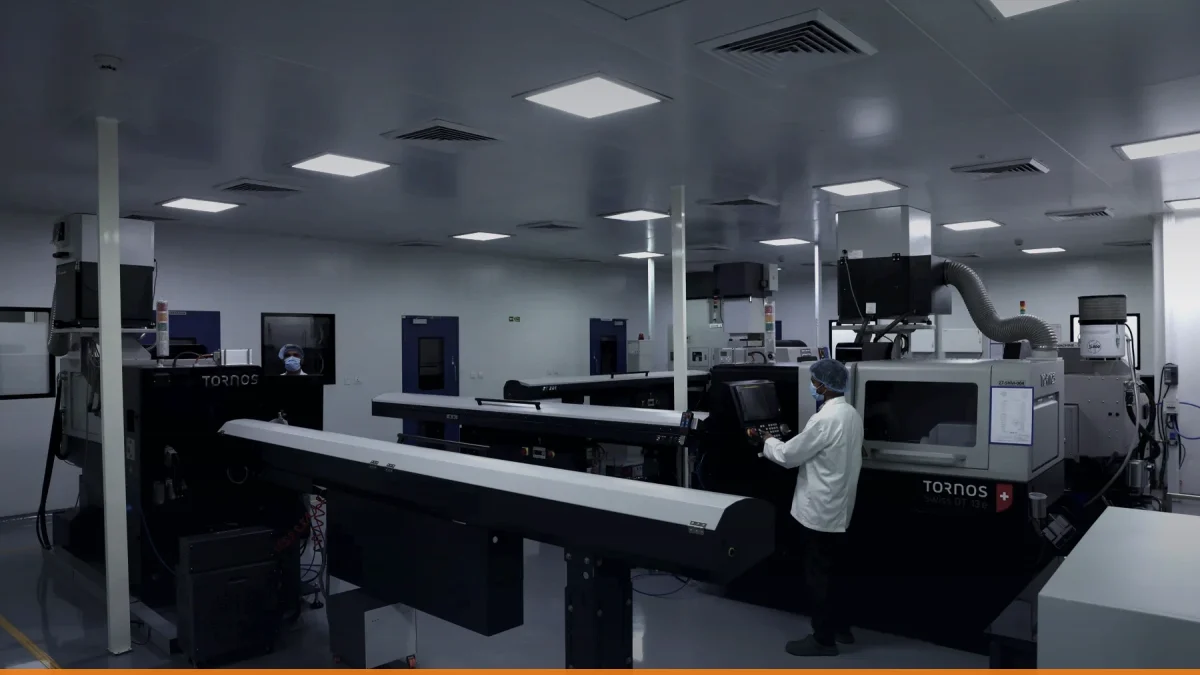
The third piece sits after the implant has integrated. Digital dental prosthetics in India are usually outsourced to a laboratory with no relationship to whoever made the implant, and the Crown Series exists so that this range does not have to be. It is an on-premises digital dental laboratory in the same manufacturing facility as the implant machining floor, running 3Shape and exocad workflows and producing restorations to a two-lab-day turnaround with a remake rate below 2%.
Being a dental prosthetics manufacturer as well as an implant manufacturer changes what the laboratory can be held to. The output covers full-contour and layered zirconia, IPS e.max and e.max veneers, reduction copings, 3D models, crowns and bridges, veneers, digital dentures, surgical guides and night guards. For a clinic already placing i-Fix implants, the useful part is that the laboratory is designing against the same connection geometry the implants were machined to, rather than against a third-party library approximation of it.
That connection between the lab and the implant is also why the exocad libraries matter. A laboratory scanning an i-Fix case needs the implant library that carries the real geometry, and those are published per connection platform rather than per series.
Why it is worth buying these from one place
The argument is not convenience. It is that the failure points in an implant case tend to sit at the joins between suppliers. A graft material whose granule size does not suit the defect, an osteotomy prepared to a sequence written for a different implant, a laboratory designing against a library that approximates the connection: none of those is a dramatic failure, and all of them cost a clinic remakes and chair time. Buying the implant, the graft, the instrumentation and the restoration from one manufacturer removes the reconciliation step, and it means one team can be asked a question that spans two of them.